Graphic design spans a wide range of formats, from printed brochures and packaging to websites, social media graphics and digital advertising. While the principles of visual communication remain the same, designing for print and digital environments requires different technical considerations and design approaches.
Understanding these differences helps ensure designs work effectively across channels and maintain a consistent brand presence.
For organisations operating across both online and offline media, designers must often adapt the same visual concepts for different platforms while maintaining clarity, usability and visual consistency.
What Is Print Graphic Design?
Print graphic design refers to visual materials produced for physical distribution. Common examples include brochures, leaflets, magazines, posters, packaging and corporate stationery.
Designers working in print typically focus on fixed layouts intended to be reproduced exactly as designed. Because print materials are physical objects, production processes such as printing methods, paper types and finishing techniques play an important role in the final result.
Print design is still widely used in marketing campaigns, exhibitions and corporate communications, particularly where a tangible format helps reinforce brand presence.
Examples of print design include:
- brochures and catalogues
- posters and exhibition graphics
- product packaging
- business stationery
- magazines and reports
Print projects often require collaboration with printers to ensure colours, materials and finishing techniques are reproduced accurately.
What Is Digital Graphic Design?
Digital graphic design focuses on visual content intended for screens rather than physical production. This includes website interfaces, social media graphics, online advertising, mobile apps and email marketing assets.
Unlike print materials, digital designs must often adapt to different screen sizes and devices. This introduces additional considerations such as responsive layouts, accessibility and user interaction.
Examples of digital design include:
- website layouts and user interfaces
- digital advertising banners
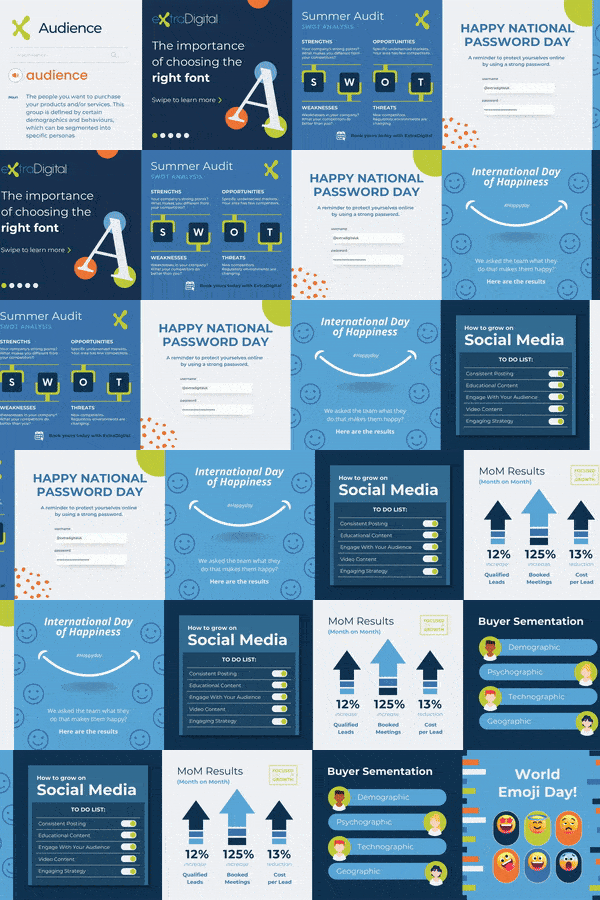
- social media graphics
- email marketing templates
- app interface design
Digital design also plays a central role in broader digital marketing strategies. For example, visual assets used in online campaigns must support usability, engagement and conversion goals.
See also: Digital marketing services
Key Differences Between Print and Digital Design
Although the same design principles apply to both formats, the technical environment differs significantly.
| Factor | Print Design | Digital Design |
|---|---|---|
| Format | Fixed size and layout | Responsive across screens |
| Colour model | CMYK or Pantone | RGB or HEX |
| Resolution | Typically 300 DPI | Pixel-based display |
| Interaction | Static | Interactive |
| Updates | Requires reprint | Easily updated |
These differences affect how designers approach typography, imagery and layout structure.
Colour and Resolution Considerations
One of the most significant technical differences between print and digital design is the colour system used.
Print production relies on CMYK colour mixing, which combines cyan, magenta, yellow and black inks. Digital screens use RGB colour models, which generate colours using light.
Because these systems work differently, colours may appear differently when designs are converted from digital to print. Designers often prepare separate files optimised for each medium to maintain colour consistency.
Print materials also require higher image resolution, usually around 300 DPI, to ensure sharp output when printed.
Interaction and User Experience
Print design communicates through static layouts. Designers guide readers using typography, layout hierarchy and imagery.
Digital design introduces interaction. Users can:
- click links and buttons
- navigate menus
- scroll through content
- watch animations or videos
These behaviours influence how information is structured and presented.
For example, website design must consider navigation structure, page hierarchy and user journeys. Visual elements should support usability rather than simply providing decoration.
More on this topic: User experience (UX) design services
Responsive Design and Multiple Devices
Another key difference between print and digital design is responsiveness.
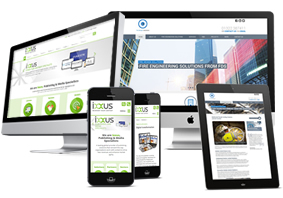
Print designs are created for a specific physical size. Digital designs must adapt to multiple screen sizes including:
- desktop monitors
- tablets
- smartphones
Responsive design ensures layouts remain usable and visually balanced across devices. This often requires flexible grids, scalable images and adaptable typography.
Design systems and component libraries are commonly used to maintain consistency across digital platforms.
Integrating Print and Digital Design
In many marketing campaigns, print and digital design are used together rather than separately.
Printed materials frequently direct users toward digital experiences through:
- QR codes
- website URLs
- social media references
- downloadable resources
For example, brochures may encourage visitors to explore a company website, while printed exhibition graphics may promote online resources or product demonstrations.
Successful campaigns therefore ensure visual consistency across all formats. Branding, typography and imagery should remain aligned whether content appears in print or on screen.
More about integrated campaigns: Integrated digital marketing
Choosing the Right Approach
Neither print nor digital design is inherently better. Each format offers distinct advantages depending on the communication objective.
Print design often provides strong physical presence and permanence, making it useful for events, packaging and corporate literature.
Digital design offers greater flexibility, interactivity and reach. Content can be updated quickly and distributed globally through websites, social media and online advertising.
Most organisations benefit from using both formats strategically as part of a broader marketing approach.
Adapting Your Skills
Adapting your skills for print and digital media involves understanding the strengths and limitations of each. Here are some tips:
- Stay Updated: Follow trends in print and digital design. Each format changes, and staying informed helps you create effective designs that are up-to-date and trending.
- Know Your Audience: Consider where your audience will see your design. Tailor your approach to the medium’s strengths and the audience’s preferences.
- Consistency is Key: maintain a strong brand identity across print and digital formats using the same colour palette, fonts, and imagery style.
- Use the Right Tools: Get familiar with design software that excels in print and digital design. Adobe Creative Suite, for example, offers tools for both.
- Experiment and Adapt: Don’t be afraid to experiment with new techniques and ideas. Each project is an opportunity to learn and enhance your skills.
Conclusion
Print and digital graphic design share many visual principles but differ significantly in technical requirements and user interaction. Designers must adapt layouts, colours, typography and imagery to suit the medium in which the content will appear.
For organisations working across multiple channels, maintaining consistent design standards while adapting for different platforms is essential. When print and digital formats are integrated effectively, they can reinforce each other and create a more cohesive brand experience.
Print vs Digital Graphic Design FAQs
What is the main difference between print and digital graphic design?
The main difference between print and digital graphic design lies in how designs are produced and viewed. Print design focuses on physical materials like brochures, posters, and business cards, while digital design is created for screens such as websites, social media, and emails. At ExtraDigital, understanding both formats helps create designs that work seamlessly across all marketing channels.
Why does print design require a higher resolution than digital design?
Print design requires a higher resolution because printed materials need more detail to appear sharp. Designers typically use 300 DPI for print to ensure clarity, while digital design usually works well at 72 DPI since screens do not require as much detail as physical prints.
Why are different colour modes used for print and digital designs?
Print design uses CMYK colour mode because printers mix cyan, magenta, yellow, and black inks to create colours. Digital design uses RGB colour mode, which relies on red, green, and blue light for screens. Using the correct colour mode ensures colours appear accurate in each medium.
What is responsive design and why is it important for digital graphics?
Responsive design ensures that digital graphics look good across different screen sizes, including desktops, tablets, and mobile devices. It is important because users view digital content on many devices, and designs must adapt without losing readability or visual impact, a key focus in digital projects at ExtraDigital.
How can designers maintain consistency across print and digital formats?
Designers can maintain consistency by using the same colour palette, fonts, and imagery style across both print and digital formats. Keeping branding consistent helps build recognition and ensures a cohesive experience, no matter where the audience encounters the design.