Marketing
Is AI Search Taking Traffic Away From Your Website?
Noticing a dip in organic search traffic? Learn how AI Overviews, ChatGPT and Perplexity affect website clicks, visibility and what marketing teams can do.
By Emma Frewin
You open your reporting dashboard and notice a quiet downward drift in organic traffic. Rankings for target search terms appear steady, yet clicks from organic search have softened over recent months. Enquiries originating from search engines are slower than expected.
For many marketing managers, this drop feels difficult to diagnose because traditional performance indicators seem stable. The explanation increasingly lies outside your website. Generative search engines and conversational tools are answering user queries directly, altering how potential customers find information and whether they click through to websites at all.
The short answer: AI search reduces clicks on informational queries
In many instances, yes. When search engines provide comprehensive answers directly on the results page, users have less incentive to visit individual websites. However, the commercial impact depends heavily on your industry, your target audience and the intent behind the queries your website relies on for traffic.
How conversational search changes user behaviour
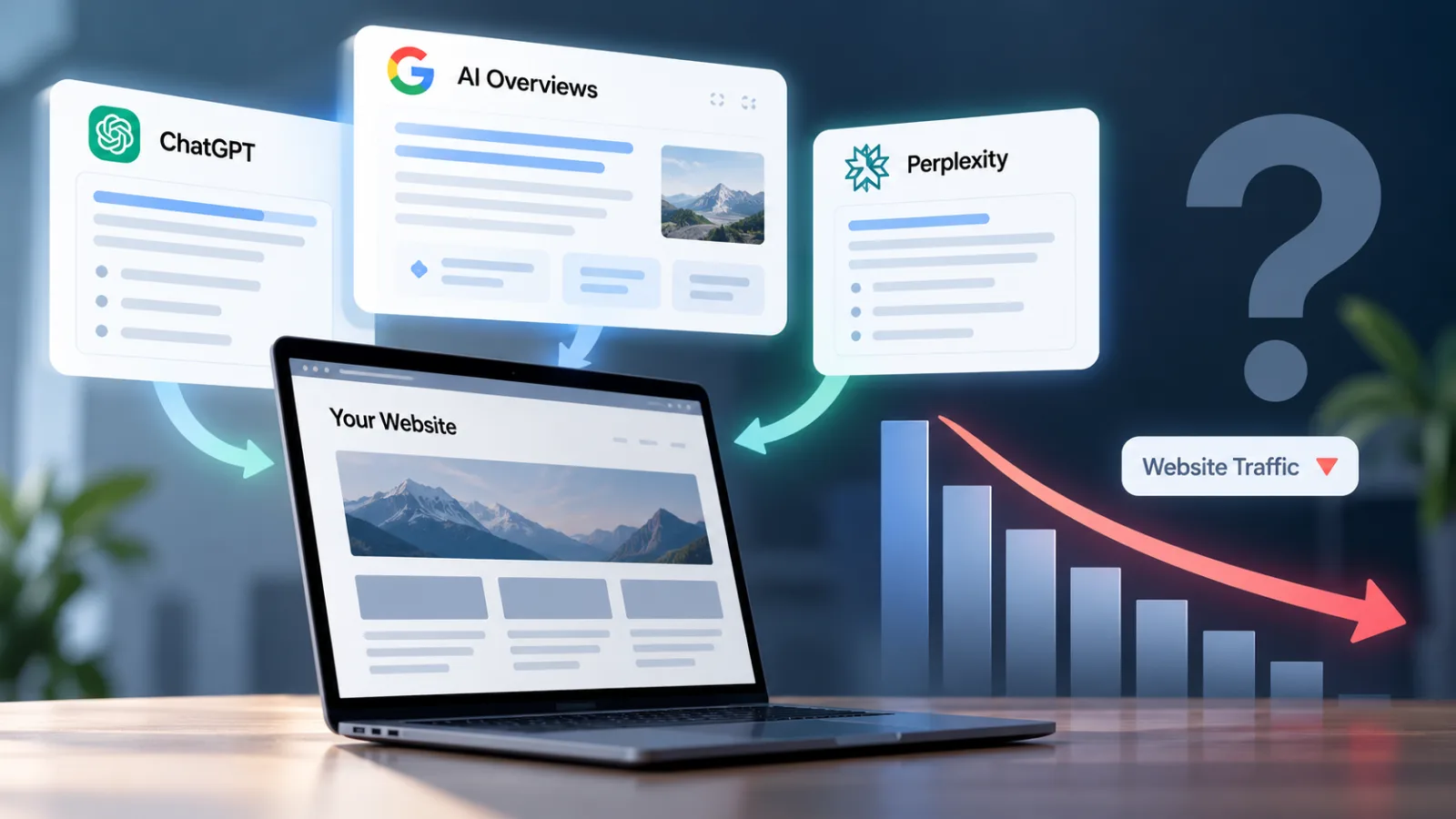
Search engines are shifting from directories of links to answer engines. Tools such as Google AI Overviews, ChatGPT and Perplexity synthesize information from multiple web pages into a single response. A user searching for explanations, comparisons or summaries can often read everything required without clicking a link.
This zero-click experience is altering the traditional discovery phase. Potential buyers can research a commercial problem, evaluate different approaches and form a clear preference before they ever land on a supplier website. If your content strategy relies heavily on broad informational articles, you may find traffic declining even while search impressions remain high.
Traditional search rankings no longer guarantee visibility
Securing a position at the top of organic search results used to guarantee a steady stream of visitors. Today, an AI Overview frequently occupies the prime visible space on screen, pushing standard organic results further down the page. Even if your page retains a high organic rank, it may sit well below an interactive summary that satisfies the user immediately.
Furthermore, AI platforms do not always cite the websites that hold the highest traditional organic rankings. They extract insights from authoritative sources, discussion forums, industry guides and review platforms that demonstrate genuine expertise. Businesses that rely purely on traditional ranking tactics risk disappearing from these synthesized summaries altogether.
The commercial impact on visibility and enquiries
The loss of website clicks is only part of the challenge. When potential clients bypass your website, you lose the opportunity to present your brand narrative, demonstrate case studies and guide visitors toward an enquiry form. The relationship begins on third-party platforms rather than your own digital property.
This shift also distorts performance reporting. A decline in informational visits does not automatically mean commercial failure, provided that visitors with high buying intent still arrive. Conversely, if your brand is absent from AI recommendations when buyers ask for supplier shortlists, your sales pipeline will feel the impact before analytics tools reveal an obvious problem.
Tracking your presence across conversational engines
Measuring visibility in conversational search requires different methods than tracking standard keyword rankings. Generative models personalise responses and vary their citations depending on phrasing, context and user location. A simple manual search will not give a representative picture of your market reach.
Specialised tracking platforms such as PromptWatch help marketing teams monitor how often their brand appears in generative answers. These tools track competitor mentions, sentiment and source citations across platforms like ChatGPT, Google AI Overviews and Perplexity. Tracking these mentions provides clear evidence of where your brand stands in automated recommendations.
Practical ways to improve your AI search visibility
- Audit your brand presence across conversational platforms. Test common buyer prompts and track whether your business appears in recommended supplier lists.
- Strengthen direct topical authority. Produce detailed, original insights and practical commentary that AI models cannot easily synthesize from generic sources.
- Maintain technical clarity. Ensure site architecture, schema markup and page structure allow automated crawlers to interpret your data accurately.
- Broaden your digital footprint. Encourage genuine client reviews and contribute to industry publications, as language models draw heavily on external validation.
- Focus on high-intent conversion pages. Refine commercial landing pages so visitors who do click through encounter clear value propositions and straightforward enquiry routes.
Adapting your search strategy for the future
Generative search tools are not replacing the web, but they are filtering how users interact with it. Marketing teams that adapt their search strategies to account for conversational engines will maintain visibility and attract informed buyers who are ready to make commercial decisions.
Understanding where your brand appears across AI search platforms is the foundation of a modern organic strategy. Reviewing your visibility now helps ensure your website continues to generate qualified business opportunities.
Why is my website traffic falling while search rankings stay the same?
AI Overviews and direct answer summaries frequently answer queries directly on search result pages. When users get answers immediately, they do not click through to organic listings, even if your site ranks near the top.
Does AI search impact all website traffic equally?
No. Informational and top-of-funnel content experiences the greatest reduction in visits. High-intent commercial searches, specific product queries and direct supplier evaluations continue to drive qualified traffic to authoritative websites.
How do AI engines choose which websites to cite?
AI engines favor sources demonstrating clear authority, distinct viewpoints, original research and strong external sentiment. They synthesize data from industry publications, technical resources and independent review platforms alongside standard web pages.
Can traditional SEO still deliver business enquiries?
Yes. Traditional search engine optimisation remains fundamental because generative engines rely on well-structured, crawlable web content. However, SEO strategies must expand to address conversational discovery alongside standard keyword rankings.
More from blog
Marketing
Your Website Traffic Hasn't Dropped, So Why Are You Getting Fewer Enquiries?
Steady traffic but fewer enquiries? Learn how visitor intent, conversion rates, AI search and competition affect lead volumes, and how to find the cause.
Emma Frewin · 13 October 2026
Marketing
Google Search Is Changing: What Should Businesses Do With Their Marketing Budget?
How AI Overviews, ChatGPT, rising PPC costs and falling organic clicks should shape your 2027 marketing budget across SEO, PPC, AI search, paid social and CRO.
Emma Frewin · 30 September 2026
Marketing
ChatGPT Ads in the UK: Should Brands Add Them to Their Media Plan?
ChatGPT Ads are now available in the UK. Discover how they work, which businesses could benefit and where they fit alongside Google Ads and paid social.
Essa Siris · 18 September 2026
Next step
Want this applied to your own marketing?
- Google Premier Partner
- Microsoft Advertising Partner
- Since 2002 · 300+ clients